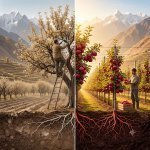
Walk into almost any modern apple orchard today, and you'll see trees packed with lush top growth. But beneath the surface, a silent crisis is brewing. Traditional apple orchards are failing because we have stopped growing local seeds and started buying commercial nursery seedlings.
By relying on these imported plants, we are trading long-term survival for short-term growth. We are effectively raising trees in a sterile biological vacuum, then expecting them to survive in a hostile natural environment.
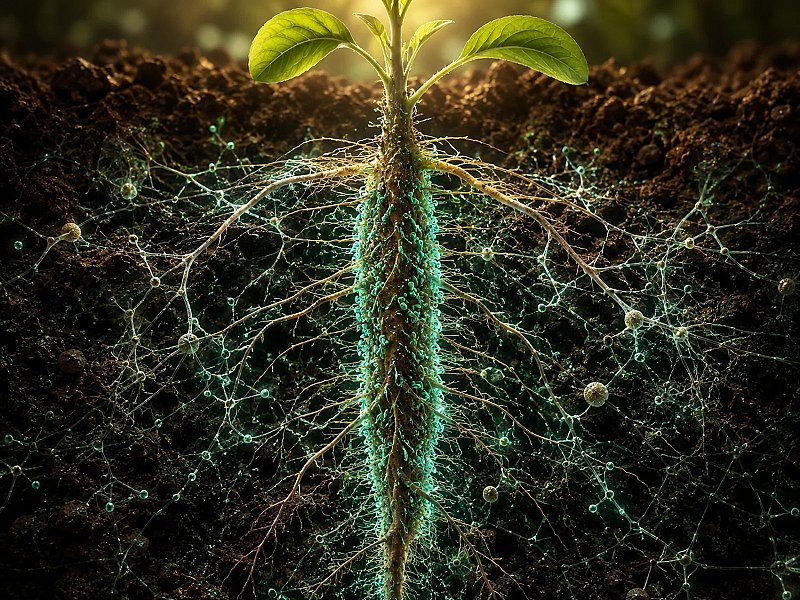
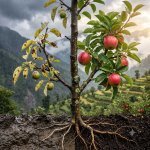
1. The Physical Problem: Missing Taproots and Shallow Foundations
When nursery seedlings are dug up, transported, and planted into drought-prone areas, they face major hidden disadvantages:
The Cut Taproot: Moving nursery plants damages their root systems. Most importantly, the central taproot is usually cut off.
The Illusion of Fertilizer: To make up for poor roots, nurseries use heavy chemical fertilizers. This forces massive top growth (leaves and branches) while leaving the roots weak and shallow.
No Climate Protection: Shallow rootstocks (like M.9 or M.26) quickly experience severe water stress when topsoil dries out due to shrinking winter snowpacks. They survive only as long as you pump them with expensive water and chemicals.
2. Why the Taproot is a Survival Requirement
A taproot is the first root to grow straight down from a seed (the radicle). In the tough, rain-fed mountain conditions of Himachal, Kashmir, and Uttarakhand, the taproot is a survival requirement:
Deep Water Access: Driven by gravity (positive gravitropism), the taproot burrows dozens of feet deep to reach subterranean aquifers. This maintains a steady column of moisture, generating the fluid water pressure (turgor pressure) needed to keep leaves hydrated and prevent wilting.
Breaking Through Rock: Protected by a tough root cap, the taproot uses physical pressure and natural root acids to split open cracks in solid bedrock, anchoring the tree into the mountain's core.
Biological "Soil Nails": On steep slopes, a thick vertical taproot drives straight through loose topsoil into solid layers below. It acts like a heavy steel nail, pinning the ground together and preventing landslides during heavy monsoons.
Wind and Snow Anchorage: High winds and heavy snow place huge pressure on a tree's canopy. Shallow roots easily tip over or uproot (windthrow). A deep taproot acts as a central counterweight, transferring the strain safely into the earth.
Energy Storage: The thick tissue of a taproot acts as an energy bank, storing carbohydrates during summer to help the tree survive winter dormancy and power a strong spring bud-break.
3. The Unseen Microbe Network: How Nature Protects the Seed
In an in-situ (natural, direct-seeded) setting, a germinating apple seed does not enter the world alone. It is protected from day one by two critical microbial partnerships:
A. The Seed Endobiome (Passed Down from Parent to Seed)
Seeds are not sterile packages. The internal tissues of a healthy apple seed contain a diverse community of beneficial bacteria (Proteobacteria, Actinobacteriota) and fungi (Ascomycota) passed down directly from the parent tree.
The Mechanism: These microbes are locked inside the embryo during flowering. When the seed wakes up from dormancy, these microbes wake up first.
Early-Stage Benefits: Long before the root can even touch the soil, these internal microbes begin making critical plant growth hormones - like Indole-3-Acetic Acid (IAA), gibberellins, and cytokinins. These hormones physically stretch and grow the young taproot. They also capture scarce iron (siderophores) and wake up the seedling's immune system, creating a built-in biological shield.
B. Native Soil Symbiosis (Recruited from the Soil)
As the healthy taproot pushes down, it releases carbon sugars (root exudates) that act as a call to local soil microbes, forming two major lifelines:
Arbuscular Mycorrhizal Fungi (AMF): Beneficial fungi (like Funneliformis mosseae) penetrate the root cells and grow a vast, microscopic web of thread-like roots (hyphae) deep into the earth. This acts as a massive extension of the root system, multiplying the tree's surface area to absorb water, phosphorus, and nitrogen from tiny soil pores.
Plant Growth-Promoting Rhizobacteria (PGPR): These friendly bacteria blanket the root-soil interface. They unlock tightly bound minerals to make them edible for the plant and secrete natural antibiotics to fight off harmful, predatory soil fungi.
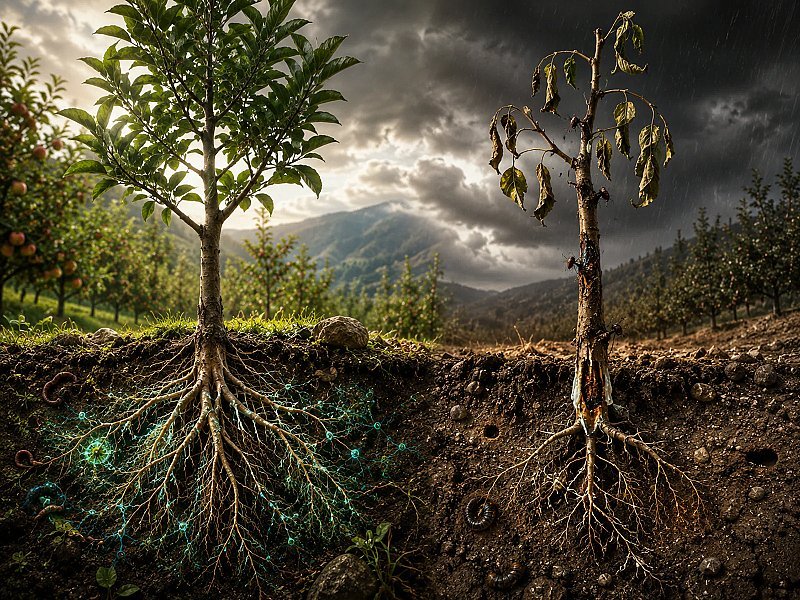
4. The Modern Disconnect: How Nurseries Strip the Biome
The commercial nursery supply chain is built for speed and cosmetic uniformity, but its practices systematically destroy the tree's natural biological relationships.
[Parent Tree] ---> Decoupled in Nurseries via Off-Site Sourcing
|
v
[Nursery Practices: Soil Fumigation, High NPK Feed]
|
v
[Mechanical Lifting: Taproot Severed, Fine Roots & Native Biome Stripped]
|
v
[Orchard Installation: Defenseless Tree Vulnerable to Acute Stress / RAD]
1. Broad-Spectrum Chemical Sterilization
To keep heavily reused nursery beds clean, operations use aggressive chemical soil fumigants (like chloropicrin or methyl bromide). While this kills bad pathogens, it acts as a biological scorched-earth policy. It wipes out the entire native mycorrhizal and bacterial community. The seedling is raised in a dead, sterile vacuum, completely missing the microbial signals it needs to develop its immune system.
2. High-NPK Suppression of Roots
To force rapid, beautiful top growth, nurseries flood the soil with highly soluble synthetic NPK fertilizers.
The Biological Cost: When a plant is flooded with easy, artificial food, it gets lazy. It stops sending carbon sugars down to its roots. This starves and shuts down the mycorrhizal fungi (AMF).
The Structural Cost: Lacking these fungal partners, the tree fails to invest in a widespread lateral root system or fine feeder roots. Instead, it wastes all its energy building weak, top-heavy leaves and branches.
3. Bare-Root Mechanical Trauma
When young trees are harvested, they undergo "mechanical lifting".They are violently pulled or dug from the ground, which severs the main taproot. Worse, the delicate, microscopic fine roots and root hairs - the exact homes where the mycorrhizal networks and rhizobacterial colonies live - are completely stripped or washed away for bare-root transport. By the time you plant this tree, its external microbiome is completely dead.
5. The Consequences: Soil Diseases and Rapid Collapse
A decoupled, outsourced tree lives in a state of chemical dependency. The moment inputs are reduced or weather shocks hit, it cannot cope.
Vulnerability to Apple Replant Disease (ARD)
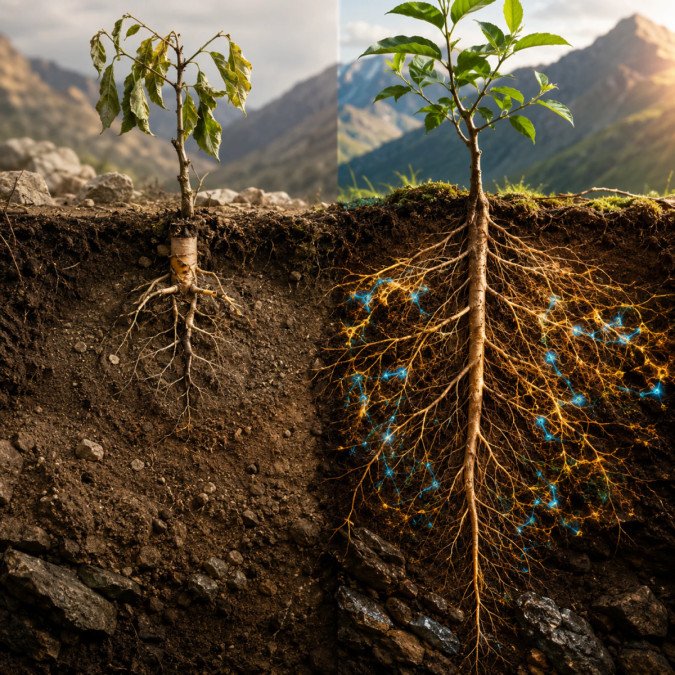
When these biologically depleted trees are planted into old orchard soils, they are instantly attacked by the Apple Replant Disease (ARD) complex\u2014a destructive group of native soil pathogens (Pythium, Phytophthora). A naturally grown seedling has a physical and chemical shield of AMF and PGPR that blocks pathogens. The bare-root nursery tree has no defense; its remaining fine roots are quickly eaten away, leading to stunting, starvation, and death.
Acute Collapse and Rapid Apple Decline (RAD)
During a sudden spring drought or extreme freeze, this lack of structural and biological defense triggers a rapid, fatal chain reaction:
Without a taproot, it cannot reach deep water tables. Without mycorrhizae, it cannot pull moisture from tiny soil pores.
Under extreme water stress, the tree's internal water pipes suffer cavitation (air bubbles that permanently block water flow).
As the tree's internal pressure drops, the bark bleeds stress-induced ethanol.
This ethanol acts as a beacon for destructive wood-boring pests, like ambrosia beetles, which tunnel into the trunk and infect it with wood-decaying fungi.
This combination of water blockages, zero microbial armor, and immediate pest attacks is the primary driver behind Rapid Apple Decline (RAD)- modern phenomenon where young, highly managed orchards suddenly wilt and die within a few weeks during a single stressful season.
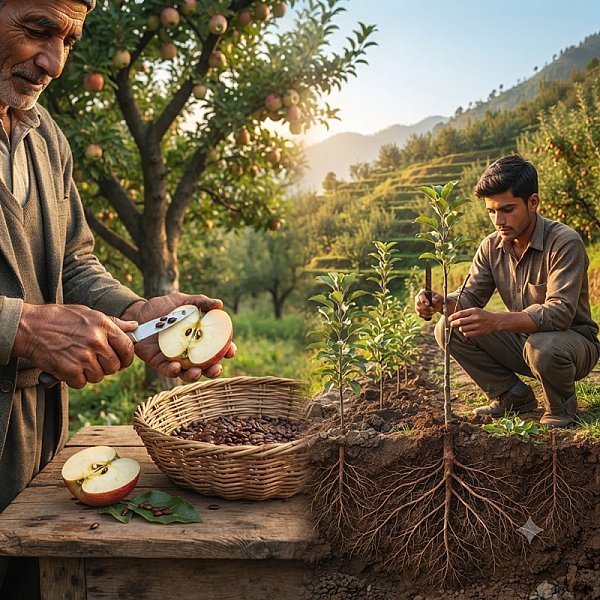
6. The Solution: Going Back to Our Roots
To stop losing money on stressed, dying trees, farmers must let the evolutionary genius of genetic memory, taproot architecture, and microbial symbiosis protect the tree from day one.
The 2-Step Plan:
Grow Your Own: Collect seeds from successful, resilient trees in your own local area and plant them directly in your orchard's soil. This ensures the seed's built-in genetic memory activates on Day 1, its natural microbial partners survive, and its taproot grows completely intact.
Patient Grafting: Leave these local seedlings alone for 2 to 3 years. Let them build their deep, rock-breaking root systems and native soil partnerships first. Once the roots are fully grown, graft your desired apple variety onto them.
Quick Summary for Farmers
The Path Forward
Growing your own seedlings and waiting 2 to 3 years to graft is a lengthy, effort-heavy process. That is why most farmers avoid it.
But the short-term convenience of buying quick nursery trees is destroying our long-term livelihoods. By investing the time to grow localized, seed-grown trees today, you will save money on chemicals, naturally suppress diseases, protect your hillsides from erosion, and build an orchard that can withstand the harshest weather nature throws at it. Stop fighting nature and start working with it again.
आज किसी भी आधुनिक सेब बाग में जाइए, आपको ऊपर से हरे-भरे पेड़ दिखेंगे। लेकिन सतह के नीचे एक साइलेंट क्राइसिस चल रही है। पारंपरिक सेब बाग फेल हो रहे हैं क्योंकि हमने लोकल बीज उगाना बंद कर दिया और कमर्शियल नर्सरी के पौधे खरीदने शुरू कर दिए।
इन इम्पोर्टेड पौधों पर निर्भर होकर, हम लॉन्ग-टर्म सर्वाइवल को शॉर्ट-टर्म ग्रोथ के लिए ट्रेड कर रहे हैं। हम असरदार तरीके से पेड़ों को एक स्टेराइल बायोलॉजिकल वैक्यूम में पाल रहे हैं, और फिर उनसे एक हॉस्टाइल नेचुरल एनवायरनमेंट में सर्वाइव करने की उम्मीद कर रहे हैं।
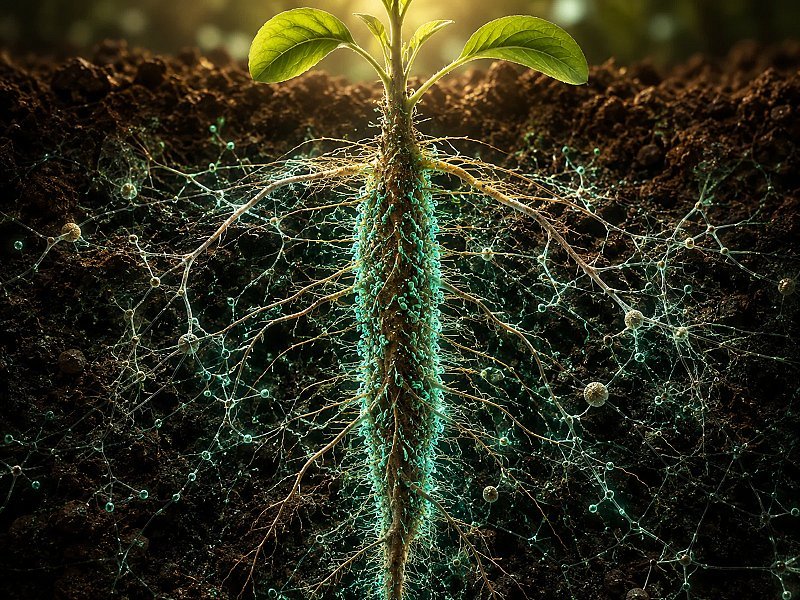
1. फिजिकल प्रॉब्लम: टैपरूट की कमी और उथली नींव
जब नर्सरी के पौधे खोदे जाते हैं, ट्रांसपोर्ट किए जाते हैं, और ड्राउट-प्रोन एरिया में लगाए जाते हैं, तो उन्हें बड़े हिडन डिसएडवांटेज का सामना करना पड़ता है:
कटा हुआ टैपरूट: नर्सरी के पौधों को मूव करने से उनकी रूट सिस्टम डैमेज होती है। सबसे महत्वपूर्ण बात, सेंट्रल टैपरूट आमतौर पर काट दिया जाता है।
फर्टिलाइज़र का इल्यूज़न: खराब जड़ों की भरपाई के लिए, नर्सरियाँ हैवी केमिकल फर्टिलाइज़र का यूज़ करती हैं। यह जबरदस्ती टॉप ग्रोथ (पत्तियाँ और शाखाएँ) करवाता है जबकि जड़ों को कमज़ोर और उथला छोड़ देता है।
कोई क्लाइमेट प्रोटेक्शन नहीं: उथले रूटस्टॉक (जैसे M.9 या M.26) जल्दी से वॉटर स्ट्रेस एक्सपीरियंस करते हैं जब सिकुड़ती सर्दियों की बर्फ की वजह से ऊपरी मिट्टी सूख जाती है। ये तभी तक सर्वाइव करते हैं जब तक आप इन्हें महँगे पानी और केमिकल से पंप करते रहें।
2. टैपरूट क्यों एक सर्वाइवल रिक्वायरमेंट है
टैपरूट वह पहली जड़ है जो बीज से सीधे नीचे की ओर बढ़ती है (रेडिकल)। हिमाचल, कश्मीर और उत्तराखंड की कठोर, बारिश-आधारित पहाड़ी कंडीशन में, टैपरूट एक सर्वाइवल रिक्वायरमेंट है:
डीप वॉटर एक्सेस: ग्रेविटी (पॉज़िटिव ग्रेविट्रोपिज़्म) से प्रेरित होकर, टैपरूट दर्जनों फीट गहरा ज़मीन के अंदर भूमिगत जल स्रोतों तक पहुँचता है। यह नमी का एक स्थिर कॉलम बनाए रखता है, जो पत्तियों को हाइड्रेट रखने और विल्टिंग रोकने के लिए ज़रूरी फ्लूइड वॉटर प्रेशर (टर्गर प्रेशर) जनरेट करता है।
चट्टान तोड़ना: एक मजबूत रूट कैप से प्रोटेक्टेड, टैपरूट फिजिकल प्रेशर और नेचुरल रूट एसिड का यूज़ करके ठोस बेडरॉक में दरारें खोलता है, पेड़ को पहाड़ के कोर में एंकर करता है।
बायोलॉजिकल \u201cमिट्टी की कील\u201d: खड़ी ढलानों पर, एक मोटा वर्टिकल टैपरूट ढीली ऊपरी मिट्टी से सीधे नीचे ठोस लेयर में घुसता है। यह भारी स्टील की कील की तरह काम करता है, ज़मीन को एक साथ पिन करता है और भारी मॉनसून के दौरान भूस्खलन को रोकता है।
हवा और बर्फ का एंकरेज: तेज़ हवाएँ और भारी बर्फ पेड़ की कैनोपी पर बहुत दबाव डालती है। उथली जड़ें आसानी से पलट या उखड़ सकती हैं (विंडथ्रो)। एक गहरा टैपरूट सेंट्रल काउंटरवेट की तरह काम करता है, स्ट्रेन को सुरक्षित रूप से पृथ्वी में ट्रांसफर करता है।
एनर्जी स्टोरेज: टैपरूट का मोटा टिशू एक एनर्जी बैंक की तरह काम करता है, गर्मियों में कार्बोहाइड्रेट स्टोर करता है ताकि पेड़ सर्दियों की डॉर्मेंसी को सर्वाइव कर सके और मजबूत स्प्रिंग बड-ब्रेक को पावर दे सके।
3. अदृश्य माइक्रोब नेटवर्क: प्रकृति बीज की रक्षा कैसे करती है
इन-सीटू (नेचुरल, डायरेक्ट-सीडेड) सेटिंग में, एक जर्मिनेटिंग सेब का बीज अकेला दुनिया में प्रवेश नहीं करता। यह दिन एक से दो क्रिटिकल माइक्रोबियल पार्टनरशिप द्वारा प्रोटेक्टेड होता है:
A. सीड एंडोबायोम (जनक से बीज में पास)
बीज स्टेराइल पैकेज नहीं हैं। एक हेल्दी सेब के बीज के इंटरनल टिशू में बेनिफिशियल बैक्टीरिया (Proteobacteria, Actinobacteriota) और फंगस (Ascomycota) की एक डायवर्स कम्युनिटी होती है जो सीधे पेरेंट ट्री से पास होती है।
मैकेनिज्म: ये माइक्रोब्स फूल आने के दौरान एम्ब्रियो के अंदर लॉक हो जाते हैं। जब बीज डॉर्मेंसी से जागता है, तो ये माइक्रोब्स सबसे पहले जागते हैं।
अर्ली-स्टेज बेनिफिट्स: जड़ मिट्टी को छूने से बहुत पहले, ये इंटरनल माइक्रोब्स क्रिटिकल प्लांट ग्रोथ हार्मोन्स—जैसे इंडोल-3-एसिटिक एसिड (IAA), जिबरेलिन्स, और साइटोकाइनिन्स—बनाना शुरू कर देते हैं। ये हार्मोन युवा टैपरूट को फिजिकली स्ट्रेच और ग्रो करते हैं। ये स्कार्स आयरन (साइडरोफोर्स) को भी कैप्चर करते हैं और सीडलिंग के इम्यून सिस्टम को जगाते हैं, एक बिल्ट-इन बायोलॉजिकल शील्ड क्रिएट करते हैं।
B. नेटिव मिट्टी सिम्बायोसिस (मिट्टी से रिक्रूट)
जैसे-जैसे हेल्दी टैपरूट नीचे धकेलता है, यह कार्बन शुगर (रूट एक्स्यूडेट्स) रिलीज़ करता है जो मिट्टी के माइक्रोब्स को कॉल करता है, जिससे दो मेजर लाइफलाइन्स बनती हैं:
आर्बस्क्युलर माइकोराइज़ल फंगस (AMF): बेनिफिशियल फंगस (जैसे Funneliformis mosseae) रूट सेल्स में पेनिट्रेट करते हैं और धरती में गहराई तक थ्रेड-लाइक जड़ों (हाइफी) का एक विशाल माइक्रोस्कोपिक वेब उगाते हैं। यह रूट सिस्टम का एक मैसिव एक्सटेंशन है, जो पेड़ की सतह एरिया को कई गुना बढ़ाकर छोटे मिट्टी के छिद्रों से पानी, फॉस्फोरस और नाइट्रोजन अब्ज़ॉर्ब करता है।
प्लांट ग्रोथ-प्रमोटिंग राइज़ोबैक्टीरिया (PGPR): ये फ्रेंडली बैक्टीरिया रूट-सॉइल इंटरफेस पर कंबल की तरह रहते हैं। ये टाइट बाउंड मिनरल्स को अनलॉक करके प्लांट के लिए खाने योग्य बनाते हैं और हानिकारक, प्रीडेटरी सॉइल फंगस से लड़ने के लिए नेचुरल एंटीबायोटिक्स सीक्रेट करते हैं।
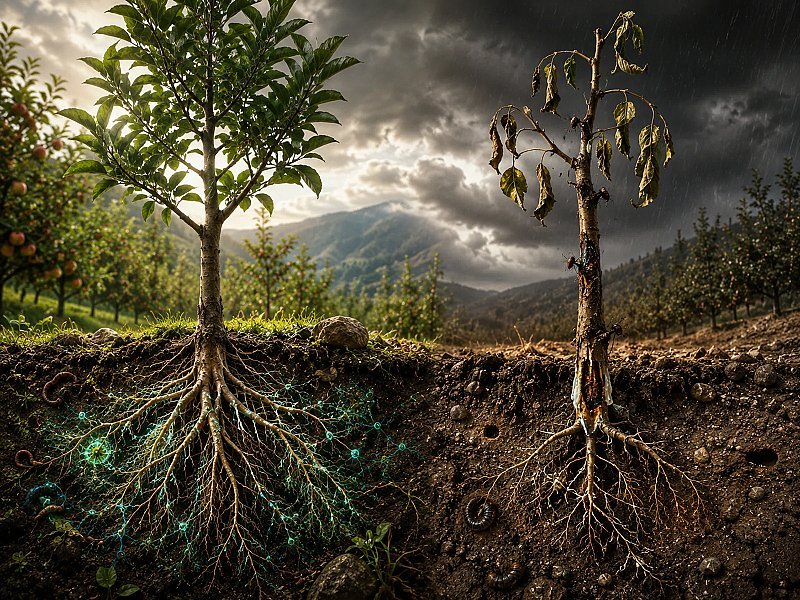
4. आधुनिक डिस्कनेक्ट: नर्सरियाँ कैसे बायोम को स्ट्रिप कर रही हैं
कमर्शियल नर्सरी सप्लाई चेन स्पीड और कॉस्मेटिक यूनिफॉर्मिटी के लिए बनी है, लेकिन इसके प्रैक्टिसेज़ पेड़ के नेचुरल बायोलॉजिकल रिलेशनशिप को सिस्टमैटिकली डिस्ट्रॉय करते हैं।
[पेरेंट ट्री] ---> नर्सरियों में डीकपल (ऑफ-साइट सोर्सिंग)
|
v
[नर्सरी प्रैक्टिसेज़: मिट्टी फ्यूमिगेशन, हाई NPK फीड]
|
v
[मैकेनिकल लिफ्टिंग: टैपरूट कटा, फाइन रूट्स और नेटिव बायोम स्ट्रिप्ड]
|
v
[बाग इंस्टॉलेशन: डिफेंसलेस पेड़ एक्यूट स्ट्रेस / RAD के लिए वल्नरेबल]
1. ब्रॉड-स्पेक्ट्रम केमिकल स्टेरिलाइज़ेशन
भारी यूज़ वाली नर्सरी बेड को साफ रखने के लिए, ऑपरेशंस आक्रामक केमिकल मिट्टी फ्यूमिगेंट्स (जैसे क्लोरोपिक्रिन या मिथाइल ब्रोमाइड) का यूज़ करते हैं। हालाँकि यह बुरे पैथोजन को मारता है, लेकिन यह बायोलॉजिकल स्कॉर्च्ड-अर्थ पॉलिसी की तरह काम करता है। यह पूरे नेटिव माइकोराइज़ल और बैक्टीरियल कम्युनिटी को खत्म कर देता है। पौधा एक डेड, स्टेराइल वैक्यूम में पलता है, उन माइक्रोबियल सिग्नल्स को पूरी तरह मिस करता है जिनकी उसे अपना इम्यून सिस्टम डेवलप करने के लिए ज़रूरत होती है।
2. हाई-NPK जड़ों का दमन
तेज़, सुंदर टॉप ग्रोथ फोर्स करने के लिए, नर्सरियाँ हाईली सॉल्युबल सिंथेटिक NPK फर्टिलाइज़र से मिट्टी को फ्लड करती हैं।
बायोलॉजिकल कॉस्ट: जब पौधे को आसान, आर्टिफिशियल खाना फ्लड किया जाता है, तो वह आलसी हो जाता है। वह अपनी जड़ों में कार्बन शुगर भेजना बंद कर देता है। यह माइकोराइज़ल फंगस (AMF) को भूखा मारता है और शट डाउन करता है।
स्ट्रक्चरल कॉस्ट: इन फंगल पार्टनर्स के बिना, पेड़ वाइडस्प्रेड लेटरल रूट सिस्टम या फाइन फीडर रूट्स में इन्वेस्ट नहीं करता। इसके बजाय, यह अपनी सारी एनर्जी कमज़ोर, टॉप-हैवी पत्तियों और शाखाओं में वेस्ट करता है।
3. बेयर-रूट मैकेनिकल ट्रॉमा
जब युवा पेड़ हार्वेस्ट किए जाते हैं, तो वे \u201cमैकेनिकल लिफ्टिंग\u201d से गुज़रते हैं। उन्हें हिंसक तरीके से खींचा या ज़मीन से खोदा जाता है, जो मुख्य टैपरूट को अलग करता है। इससे भी बुरी बात, डेलिकेट, माइक्रोस्कोपिक फाइन रूट्स और रूट हेयर्स—जहाँ माइकोराइज़ल नेटवर्क और राइज़ोबैक्टीरियल कॉलोनियाँ रहती हैं—बेयर-रूट ट्रांसपोर्ट के लिए पूरी तरह स्ट्रिप या धो दी जाती हैं। जब तक आप यह पेड़ लगाते हैं, इसका बाहरी माइक्रोबायोम कम्पलीटली डेड होता है।
5. नतीजे: मिट्टी की बीमारियाँ और तेज़ पतन
एक डीकपल्ड, आउटसोर्स किया हुआ पेड़ केमिकल डिपेंडेंसी की स्थिति में रहता है। जैसे ही इनपुट कम होते हैं या वेदर शॉक्स लगते हैं, यह सामना नहीं कर पाता।
एप्पल रिप्लांट डिज़ीज़ (ARD) के प्रति वल्नरेबिलिटी
जब ये बायोलॉजिकली डिप्लीटेड पेड़ पुरानी बाग की मिट्टी में लगाए जाते हैं, तो उन पर तुरंत ARD कॉम्प्लेक्स का हमला होता है—नेटिव मिट्टी के पैथोजन (Pythium, Phytophthora) का एक डिस्ट्रक्टिव ग्रुप। नेचुरली उगाया गया पौधा AMF और PGPR का एक फिजिकल और केमिकल शील्ड रखता है जो पैथोजन को ब्लॉक करता है। बेयर-रूट नर्सरी पेड़ के पास कोई डिफेंस नहीं है; इसकी बची-खुची फाइन रूट्स जल्दी खत्म हो जाती हैं, जिससे स्टंटिंग, स्टार्वेशन और डेथ होती है।
एक्यूट कोलैप्स और रैपिड एप्पल डिक्लाइन (RAD)
अचानक स्प्रिंग ड्राउट या एक्सट्रीम फ्रीज़ के दौरान, यह स्ट्रक्चरल और बायोलॉजिकल डिफेंस की कमी एक रैपिड, फेटल चेन रिएक्शन शुरू करती है:
टैपरूट के बिना, यह गहरे पानी के टेबल तक नहीं पहुँच सकता। माइकोराइज़ा के बिना, यह मिट्टी के सूक्ष्म छिद्रों से नमी नहीं खींच सकता।
एक्सट्रीम वॉटर स्ट्रेस के तहत, पेड़ की इंटरनल वॉटर पाइप्स कैविटेशन (एयर बबल्स जो परमानेंटली वॉटर फ्लो को ब्लॉक करती हैं) से गुज़रती हैं।
जैसे-जैसे पेड़ का इंटरनल प्रेशर गिरता है, छाल स्ट्रेस-इंड्यूस्ड इथेनॉल बहाती है।
यह इथेनॉल डिस्ट्रक्टिव वुड-बोरिंग पेस्ट्स—एम्ब्रॉज़िया बीटल—के लिए बीकन का काम करती है, जो ट्रंक में सुरंग बनाकर वुड-डिकेइंग फंगस से इन्फेक्ट करते हैं।
पानी के ब्लॉकेज, जीरो माइक्रोबियल आर्मर, और तुरंत पेस्ट अटैक का यह कॉम्बिनेशन RAD के पीछे प्राइमरी ड्राइवर है—एक आधुनिक फेनोमेनन जहाँ युवा, हाईली मैनेज्ड बाग एक ही स्ट्रेसफुल सीजन के दौरान अचानक कुछ हफ्तों में मुरझा जाते हैं।
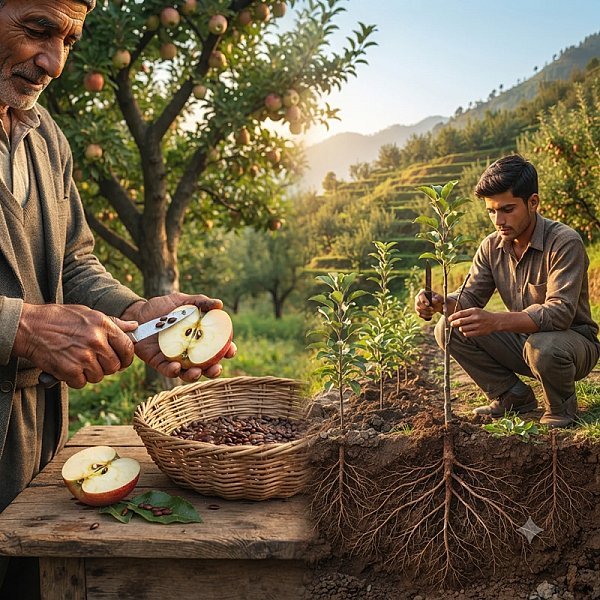
6. समाधान: अपनी जड़ों की ओर वापसी
स्ट्रेस्ड, डाइंग पेड़ों पर पैसा खोना बंद करने के लिए, किसानों को जेनेटिक मेमोरी, टैपरूट आर्किटेक्चर और माइक्रोबियल सिम्बायोसिस के एवोल्यूशनरी जीनियस को दिन एक से पेड़ की रक्षा करने देना चाहिए।
2-स्टेप प्लान:
खुद उगाएँ: अपने स्थानीय एरिया में सक्सेसफुल, रेज़िलिएंट पेड़ों से बीज इकट्ठा करें और उन्हें सीधे अपने बाग की मिट्टी में लगाएँ। यह सुनिश्चित करता है कि बीज की बिल्ट-इन जेनेटिक मेमोरी दिन 1 पर एक्टिवेट हो, इसके नेचुरल माइक्रोबियल पार्टनर्स सर्वाइव करें, और इसका टैपरूट कम्पलीटली इन्टैक्ट बढ़े।
धैर्यपूर्वक ग्राफ्टिंग: इन लोकल सीडलिंग्स को 2 से 3 साल के लिए अकेला छोड़ दें। पहले उन्हें अपनी गहरी, चट्टान-तोड़ने वाली रूट सिस्टम और नेटिव मिट्टी पार्टनरशिप बनाने दें। जब जड़ें पूरी तरह ग्रो हो जाएँ, तब उन पर अपनी इच्छित सेब वैरायटी ग्राफ्ट करें।
किसानों के लिए त्वरित सारांश
आगे का रास्ता
खुद के पौधे उगाना और ग्राफ्ट करने के लिए 2-3 साल इंतज़ार करना एक लंबी, मेहनत वाली प्रोसेस है। यही वजह है कि ज़्यादातर किसान इसे अवॉइड करते हैं।
लेकिन तैयार नर्सरी के पेड़ खरीदने की शॉर्ट-टर्म कन्वीनियंस हमारी लॉन्ग-टर्म आजीविका को डिस्ट्रॉय कर रही है। आज लोकलाइज़्ड, बीज-उगाए पेड़ उगाने में समय इन्वेस्ट करके, आप केमिकल पर पैसा बचाएँगे, नेचुरली डिज़ीज़ को सप्रेस करेंगे, अपनी पहाड़ियों को इरोज़न से प्रोटेक्ट करेंगे, और एक ऐसा बाग बनाएँगे जो प्रकृति के सबसे कठोर मौसम को भी झेल सके। प्रकृति से लड़ना बंद करें—इसके साथ काम करना शुरू करें।

Comments
No comments yet. Be the first to share your thoughts!