
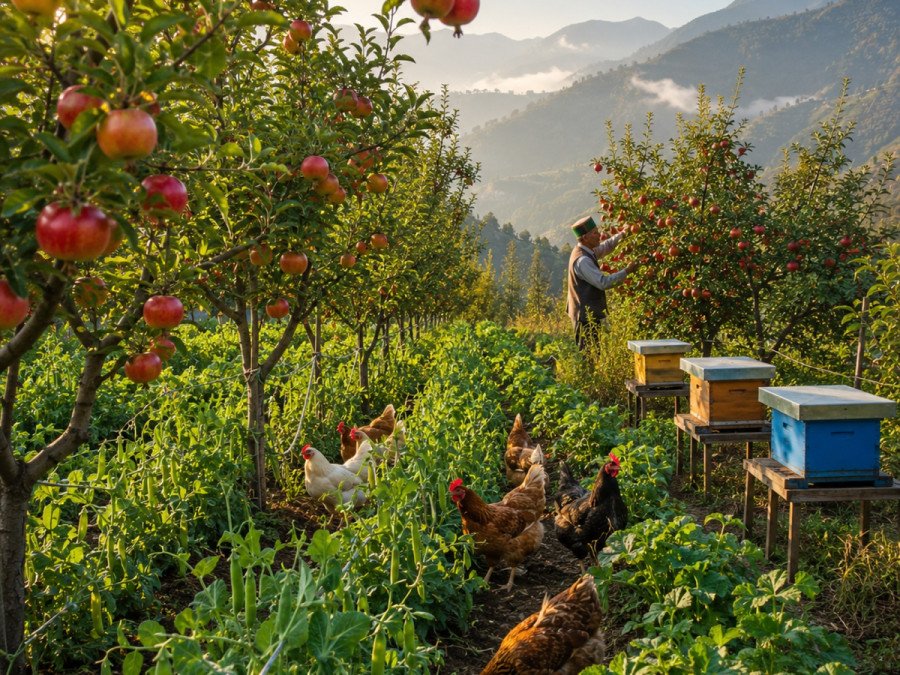
Apple orchards in India—especially in Himachal Pradesh—have long been run as monocultures. While this boosts short-term yield, it comes at a high cost. Monoculture orchards face runaway pest and disease problems, since uniform crops allow pathogens to build up and resist treatments. Heavy use of fertilizers and pesticides in such systems often kills beneficial soil microbes and disrupts natural pest controls. Over time yields decline as soils degrade. Research confirms that conventional monocropping in apple orchards “can lead to decreased soil health and biodiversity, jeopardizing long-term sustainability”. In contrast, diversified (agroecological) orchards with mixed crops show much healthier outcomes. One study found that natural-farming (mixed-cropping) apple plots had higher soil organic matter and balanced nutrients, and “exhibited lower disease severity and greater system resilience” than conventional plots. In practice, farmers now find that integrating other species stabilizes production: for example, agronomists advise that in warmer areas where apple production is failing, growers switch to more heat-tolerant fruits like plums, peaches and pomegranates.
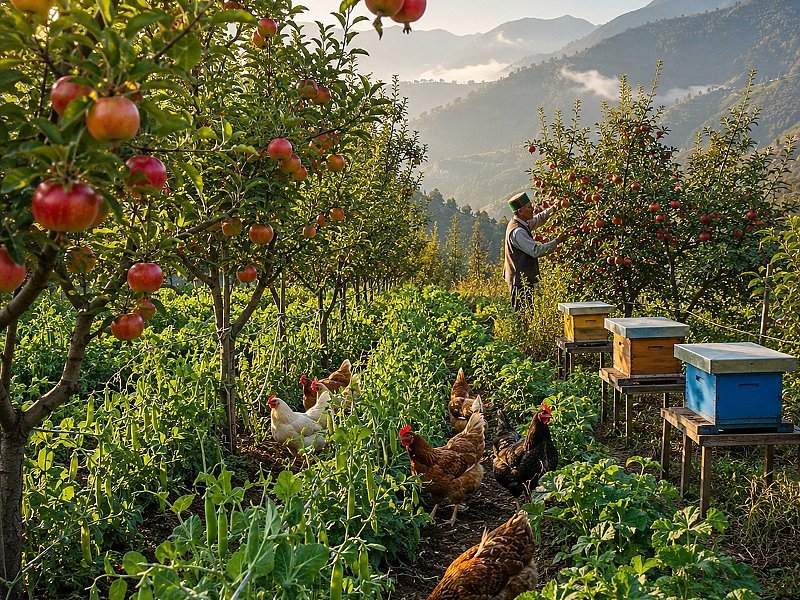
Mixed Cropping and Agroforestry in Apple Farms
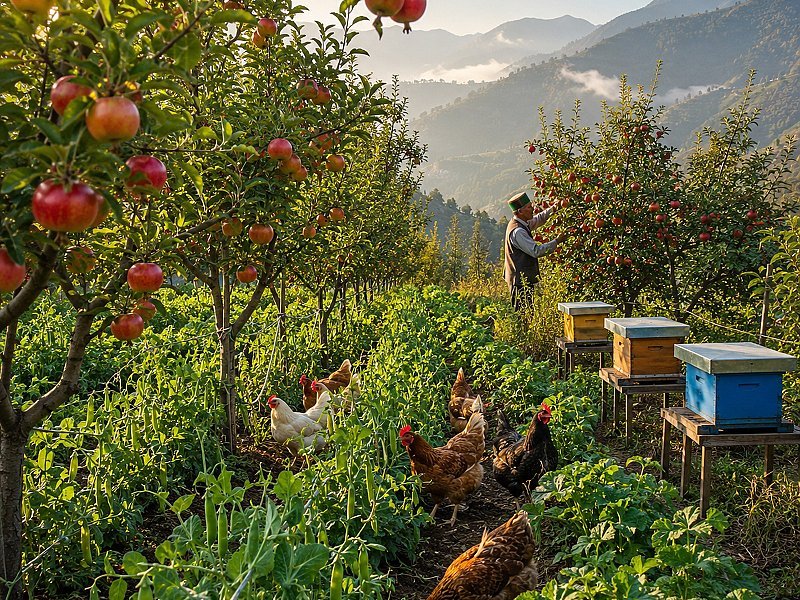
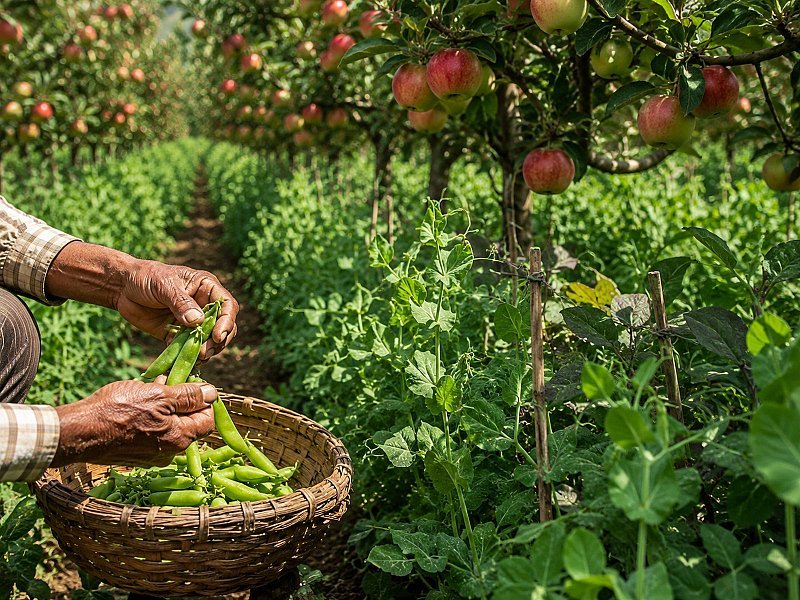
Integrating complementary crops under apple trees maximizes land use and enhances fertility. In Himachal, its been observed natural-farming orchards intercropped with peas, beans and vegetables (e.g. cabbages, kale) alongside apple. Legume intercrops (peas, rajma, greengram) fix nitrogen and allow growers to harvest an extra crop before apples mature. For instance, one on-farm trial in Kashmir found that an apple orchard interplanted with rajma (kidney bean) and oats not only produced a high apple yield (15.4 t/ha) but also earned the highest total income (~₹4.83 lakh/ha) compared to monocropped apples. Similarly, planting vegetables like beans or cole crops beneath apples improves early-season income and suppresses weeds. Beyond annual crops, many growers are adding new fruit trees. Secondary fruits such as pears, plums, peaches and apricots are being grafted into orchards to diversify harvest times. A dramatic success has been the persimmon: once a little-known crop, its trees fruit in 3 years and tolerate lower elevations. Kullu farmers who planted persimmons report annual profits (“seasonal earnings on par with IIT graduate salaries”) that far exceed former apple returns. Likewise, pomegranate and pear trees—bearing fruit in just 3–4 years—are now common. One grower in Banjar shifted his 1.5-acre orchard to pomegranates and now nets about ₹9 lakh annually, roughly double the previous apple income. In summary, by intercropping legumes, vegetables and alternate fruit species, farmers enrich soils, broaden diets, and capture multiple markets from the same orchard area.
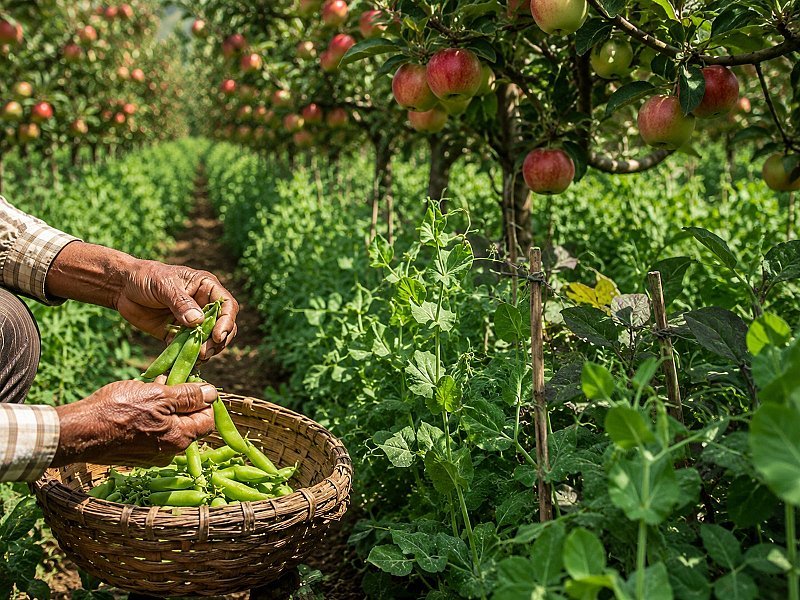
Integrating Livestock into Orchards
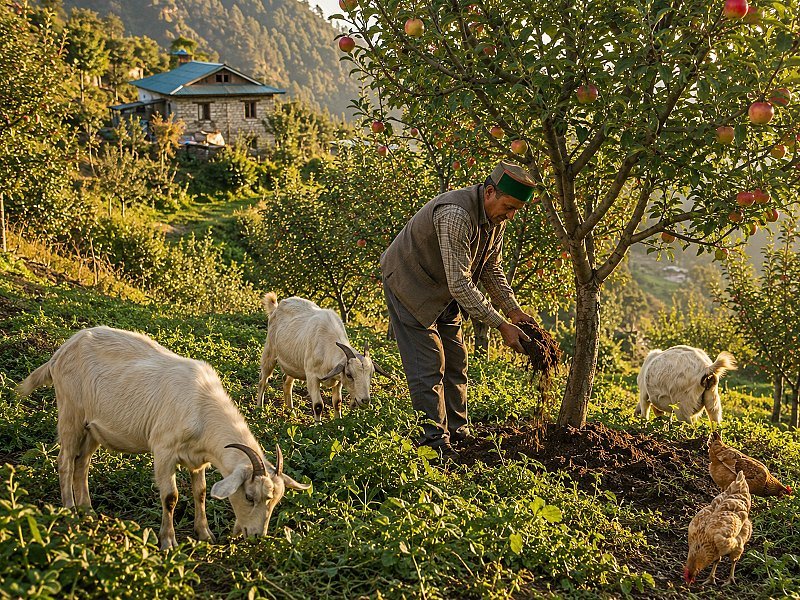
Bringing animals into the orchard system creates a beneficial nutrient cycle and new income streams. Poultry (chickens or ducks) can roam under fruit trees to eat weeds and insect pests, while naturally fertilizing the soil with their droppings. For example, trials in orchards show that free-range poultry significantly reduce weeds and pests without chemicals, and their manure markedly boosts soil fertility. Sheep and goats similarly graze cover crops between trees. Studies (and farm accounts) note that grazing livestock suppress competitive weeds in orchards and “redistribute nutrients over the orchard” through dung and urine. In India, farmers commonly recycle goat and sheep manure onto fruit trees to enrich the soil. An integrated farming model reports that “goat faeces and poultry litter are effectively recycled through vermicomposting, producing nutrient-rich organic manure” that improves orchard fertility. Beyond fertilizers, livestock provide diversified income: milk, meat and eggs can be sold or consumed at home. Overall, fruit-tree–livestock integration (a traditional Indian practice) makes farms more efficient: crop residues feed animals, and animal waste feeds trees, reducing the need for external inputs. This closed-loop approach also enhances biodiversity: well-managed pasture areas attract pollinators and beneficial insects, further improving orchard health.
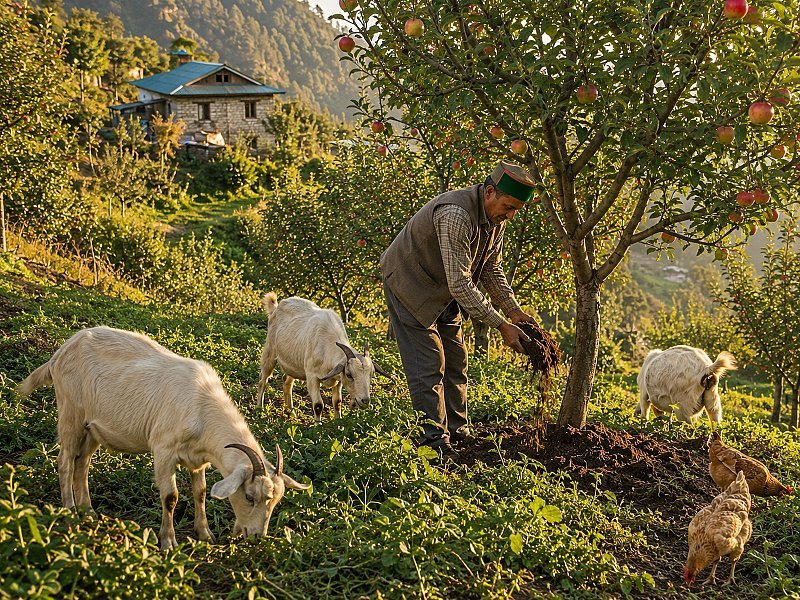
Beekeeping and Pollination Services
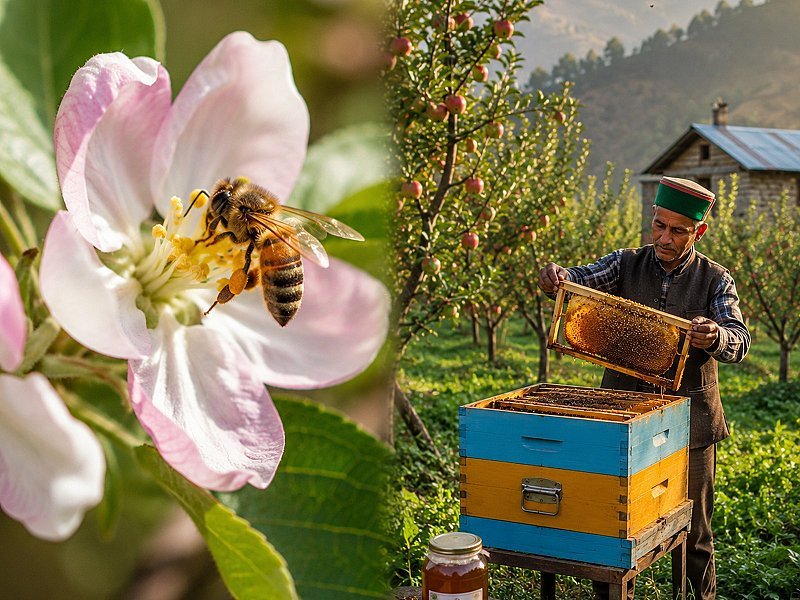
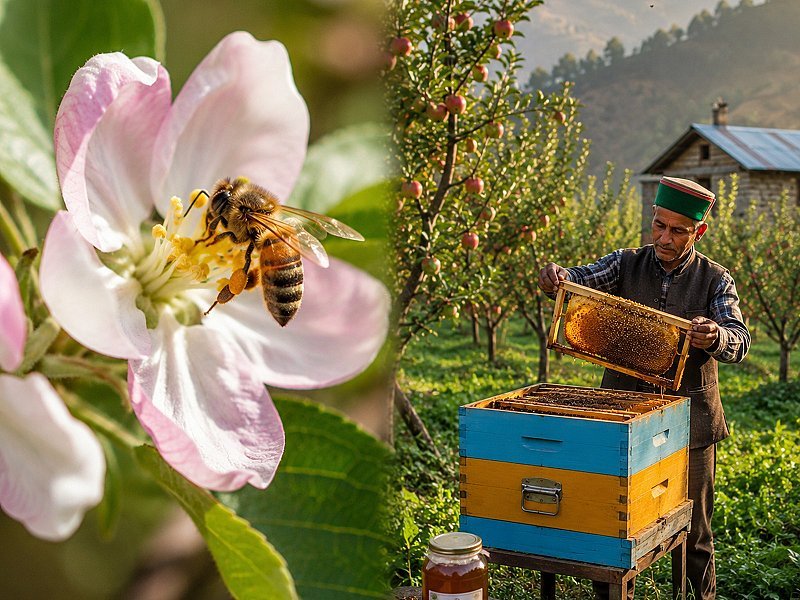
Since apples are insect-pollinated, adding bees is a high-value opportunity. Managed honeybee hives in an orchard dramatically increase fruit set. One Indian study found that apple trees pollinated by bees yielded three times the fruit of trees isolated from bees. In practice, each beehive in bloom time can carry pollen across many apple blossoms, translating to bigger, sweeter harvests. Importantly, beekeeping also provides its own revenue: India now produces ~1.4 lakh tonnes of honey annually, exporting around 1.07 lakh tonnes worth ~$178 million (FY 2023–24). Domestic demand for “mountain honey” is strong, and by-products like beeswax, pollen and royal jelly add niche income. Recognizing this, the government has launched the National Beekeeping and Honey Mission (NBHM) to spark an apiculture boom. The NBHM (budget ₹500 cr) explicitly promotes beekeeping as part of “integrated farming systems,” noting that bee pollination “plays a crucial role in pollination, thereby enhancing crop yields and farmers’ income”. For apple growers, this means that even 2–3 hives per hectare (or rented hive services) can pay for themselves via higher fruit yields and the honey sold.
Government Support and Value Chains
Multiple schemes now encourage orchard diversification. Under the Mission for Integrated Development of Horticulture (MIDH), farmers can get financial/technical aid for orchard rejuvenation, setting up mixed orchards, organic farming and even floriculture. MIDH also explicitly funds beekeeping (hive equipment, training) and protected cultivation (greenhouses for vegetables/flowers) to complement fruit trees. On the livestock side, national programs like Rashtriya Krishi Vikas Yojana (RKVY) and various State initiatives subsidize dairy sheds, poultry units or vermicompost pits, which fit well into diversified farms. Farmer Producer Organizations (FPOs) and cooperatives are being promoted so smallholders can pool produce (fruit, honey, milk, eggs) for better market access. Experts advise apple growers to form FPOs and pursue organic or natural-farming certification: niche markets (organic retail chains, government procurement, digital platforms) can pay premiums for certified, chemical-free orchards.
Concrete successes underscore these possibilities. In Himachal’s Kullu valley, thousands of hectares once monotypic apple orchards now host mixed crops and livestock. Persimmon farmers report making tens of lakhs of rupees each winter, building modern homes and sending children to college. In Banjar, farmers who diversified into pomegranates, peppers and mushrooms (with poly-line irrigation) doubled their profits compared to apple-only crops. These examples show that under supportive schemes and smart practices, ailing apple farms can be transformed into thriving, multi-enterprise systems.
Actionable Recommendations
To seize these opportunities, apple growers should adopt an integrated approach:
- Diversify crops: Intercrop legumes (peas, beans) and quick-growing vegetables (cabbage, cole crops) among the trees to utilize space, enrich soil and earn additional income. Graft or plant secondary fruits (pears, plums, peaches) in or around the orchard. Trial climate-resilient fruits like persimmons or pomegranates on marginal land.
- Integrate livestock: Introduce free-range poultry and small ruminants. Chickens and ducks will naturally control orchard weeds and pests while their manure fertilizes trees. Sheep/goats can graze cover crops, converting them into meat and manure. Save animal manure/urine for compost and soil amendments.
- Manage pollinators: Keep a few honeybee hives or collaborate with beekeepers each spring. This will greatly increase apple set and size. Process excess honey, beeswax and other hive products to sell.
- Adopt organic practices: Reduce synthetic inputs by using farmyard manure, compost, vermicompost and biofertilizers. Maintain ground cover (cover crops or mulches) to prevent erosion and boost soil carbon. (A trial in Himachal found that orchards with higher organic matter had better long-term productivity.) Employ integrated pest management (e.g. pheromone traps, bio-pesticides) to minimize chemical use.
- Leverage schemes and markets: Utilize government programs (MIDH, NBHM, ICAR/SAUs advisories) for subsidies on drip irrigation, organic certification, bee boxes, fodder crops, etc. Join FPOs or cooperatives for collective procurement of inputs and joint marketing of fruit, honey and dairy. Explore value-addition (cold storage, processing units) to turn surplus fruit into juice, jam or dried snacks.
- Form knowledge networks: Engage with extension services, NGOs and research institutions working on agroecology. The transformation to diversified orchards is place-specific; farmer-to-farmer learning and demonstrations (FPOs, Krishi Vigyan Kendras, agri-entrepreneurs) can help tailor the best mixed-cropping and livestock models for each farm.
By shifting from apple-only monocultures to mixed, integrated systems, orchardists can break the vicious cycle of pests and soil depletion. Diversified farms build natural resilience: multiple crops hedge against a bad year for any one crop, while animals and bees recycle nutrients and control problems biologically. The result is more stable harvests, improved soil health, and multiple income streams (fruit, vegetables, honey, dairy and meat). In short, diversification is the pathway to restoring traditional apple farms to profitability and sustainability in the modern era.

Comments
No comments yet. Be the first to share your thoughts!