
Five Things Every Indian Apple Farmer Must Check Before Importing HDP Plant Material
High-density apple orchards are one of the biggest investments a farmer can make. A mistake made before planting can affect orchard performance for the next 15 to 20 years. Unfortunately, many growers focus on the variety and overlook the more important questions about rootstocks, nursery quality, and supply contracts. Before booking imported planting material, every farmer should verify these five critical points.
Tarun Chauhan · · 5 min read
High-density apple orchards are one of the biggest investments a farmer can make. A mistake made before planting can affect orchard performance for the next 15 to 20 years.
Unfortunately, many growers focus on the variety and overlook the more important questions about rootstocks, nursery quality, and supply contracts. Before booking imported planting material, every farmer should verify these five critical points.
1. Select the Right Rootstock, Not Just the Right Variety
The most important decision is not whether to plant Gala, Fuji, Honeycrisp, or Red Delicious.
The most important decision is the rootstock.
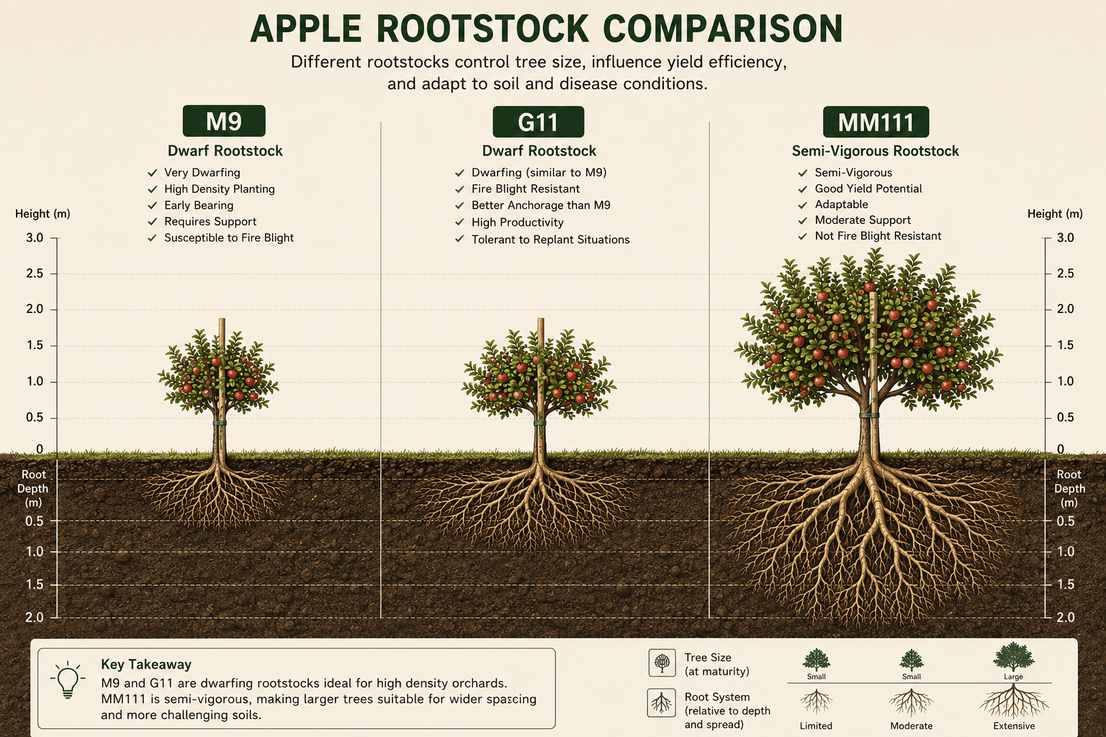
Imported trees may be available on a wide range of rootstocks including M9, M7, G11, G41, G214, MM111, EMLA 9, Budagovsky 9 (Bud 9), and Bud 10. Each rootstock behaves differently in terms of vigor, anchorage, disease resistance, replant tolerance, and soil adaptation.
Before placing an order, farmers should answer one question:
Is the orchard being planted on virgin land or on an old apple orchard site?
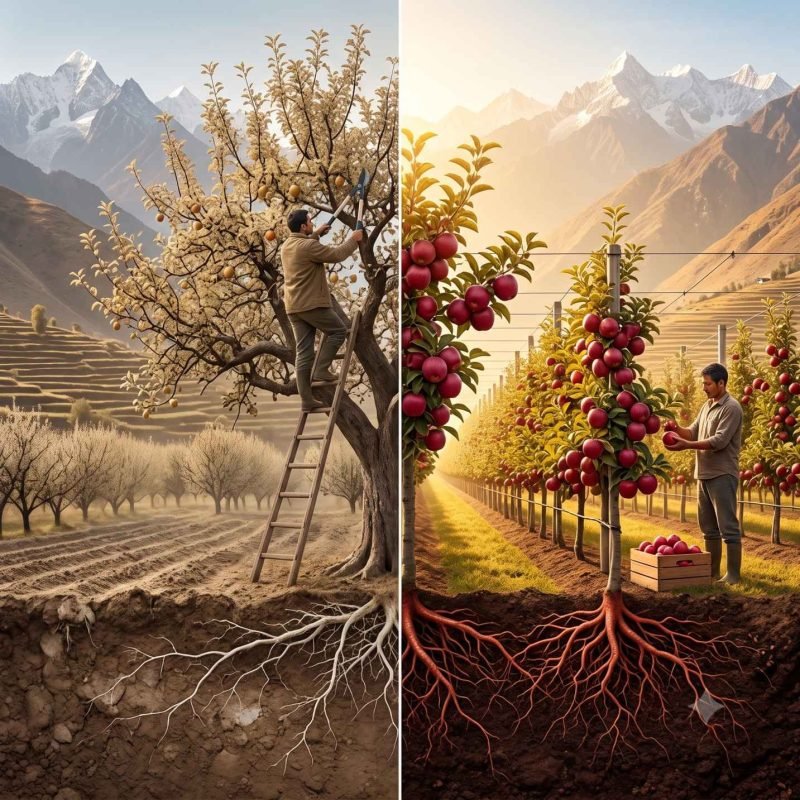
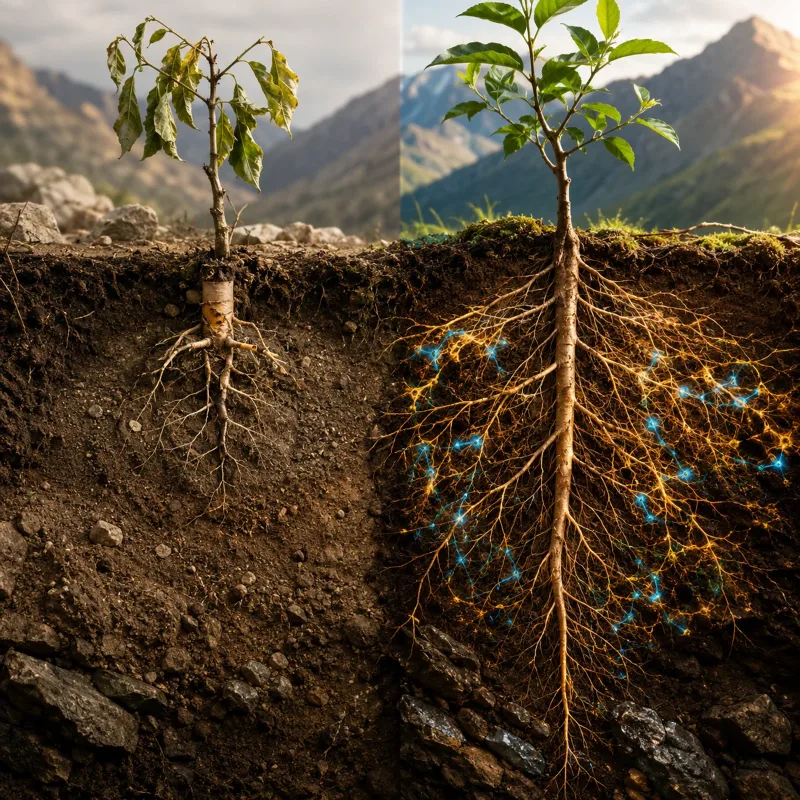
Many orchards in Himachal, Kashmir, and Uttarakhand are being replanted after the removal of traditional apple trees. Replant sites often contain soil-borne pathogens and other biological factors that reduce tree growth and survival. Research from multiple apple-growing regions has shown that rootstock choice can significantly influence orchard performance under replant conditions.
Fortunately, European nurseries often accept customized orders. While this may require an additional year of waiting, it allows growers to choose a rootstock suited to their site instead of accepting whatever is readily available.
The message is simple:
Do not order M9 because everyone else is ordering M9. Order the rootstock that fits your soil and orchard conditions. 2. Never Pay the Full Amount in Advance
One of the biggest risks for Indian growers is paying 100 percent of the order value months before delivery.
Imported trees often travel long distances and delays can occur due to logistics, paperwork, weather, or import procedures. Trees delivered late in the planting season frequently suffer higher mortality and weaker establishment.
Before making payment, insist on:
- A written delivery timeline
- A delivery deadline
- A replacement policy for damaged material
- Clear communication regarding shipment status
If an importer cannot provide a realistic delivery commitment, that should be treated as a warning sign.
A staged payment structure protects the farmer and encourages accountability throughout the process.
3. Avoid Trees That Have Been Cut Back and Re-Grown
Many growers pay premium prices without understanding how the nursery tree was produced.
A common issue involves trees that were under-sized or poorly feathered during the previous nursery season. Instead of being discarded, these trees may be cut back and grown again to stimulate new branching.
While they may appear acceptable at delivery, such trees often lack the structure and vigor expected from premium feathered planting material.
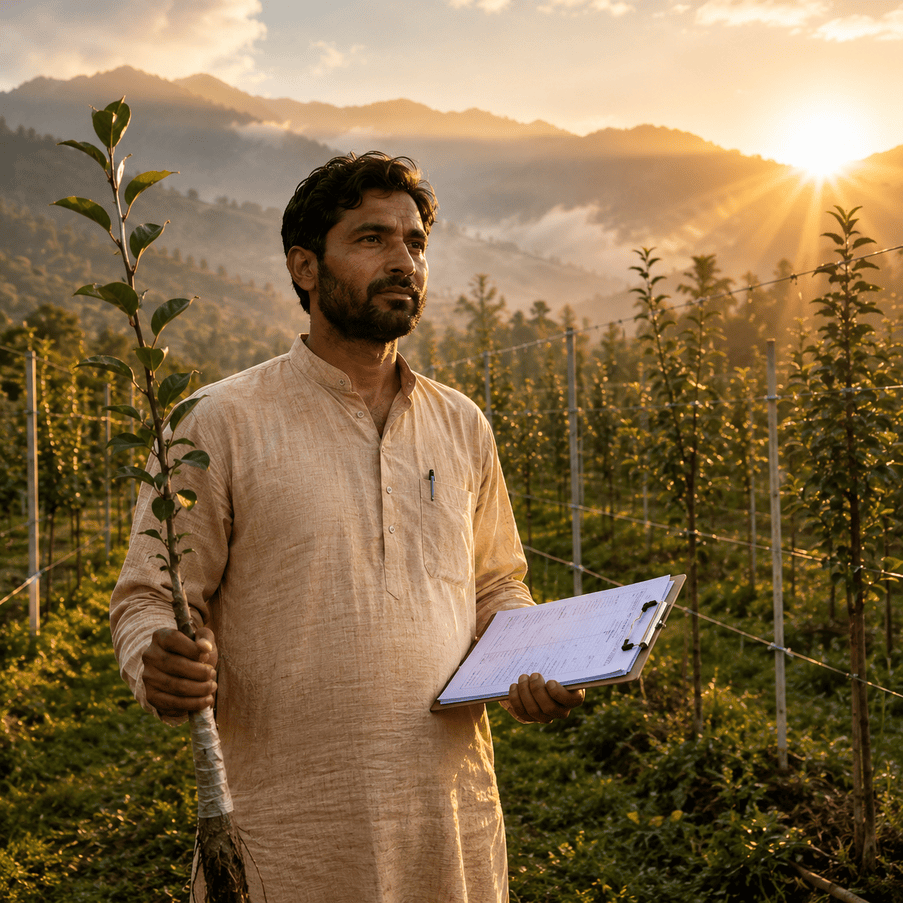
In colder apple-growing regions such as Kashmir, Kinnaur, upper Shimla, and parts of Uttarakhand, growers frequently report slower canopy development from these trees. Many struggle to fill the fruiting wall or reach the top wire within the expected timeframe.
Before accepting delivery, inspect:
- Tree height
- Feather quality
- Root development
- Graft union quality
- Uniformity across the batch
Premium orchards require premium planting material. Compromising at planting often creates problems that remain visible for years.
4. Buy as a Group, Not as an Individual
Individual growers often have very little negotiating power.
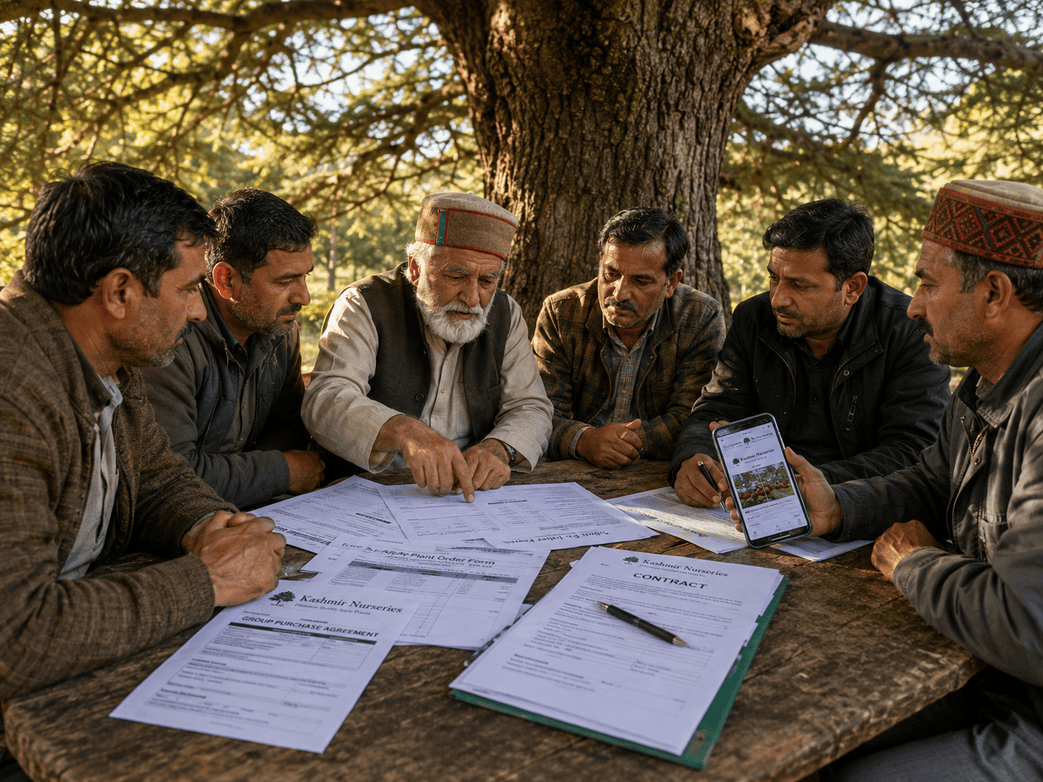
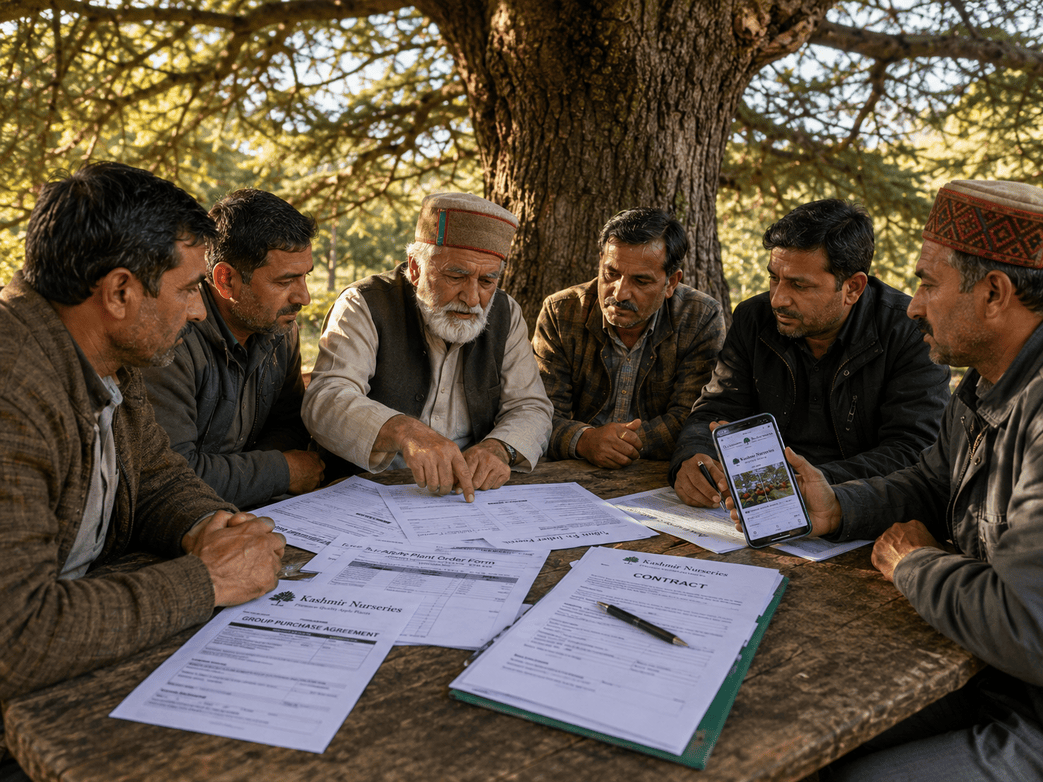
Farmer groups, cooperatives, and orchard clusters can negotiate substantially better terms by placing larger orders together.
Benefits include:
>
- Lower plant prices
- Better freight rates
- Priority allocation of planting material
- Greater leverage in case of disputes
- Improved access to customized rootstock orders
Large orders also encourage importers and nurseries to provide better documentation and communication.
When farmers negotiate collectively, everyone benefits.
5. Build a Direct Relationship with the Source Nursery
Many growers know the importer but have no idea where their trees were actually produced.
That is a mistake.
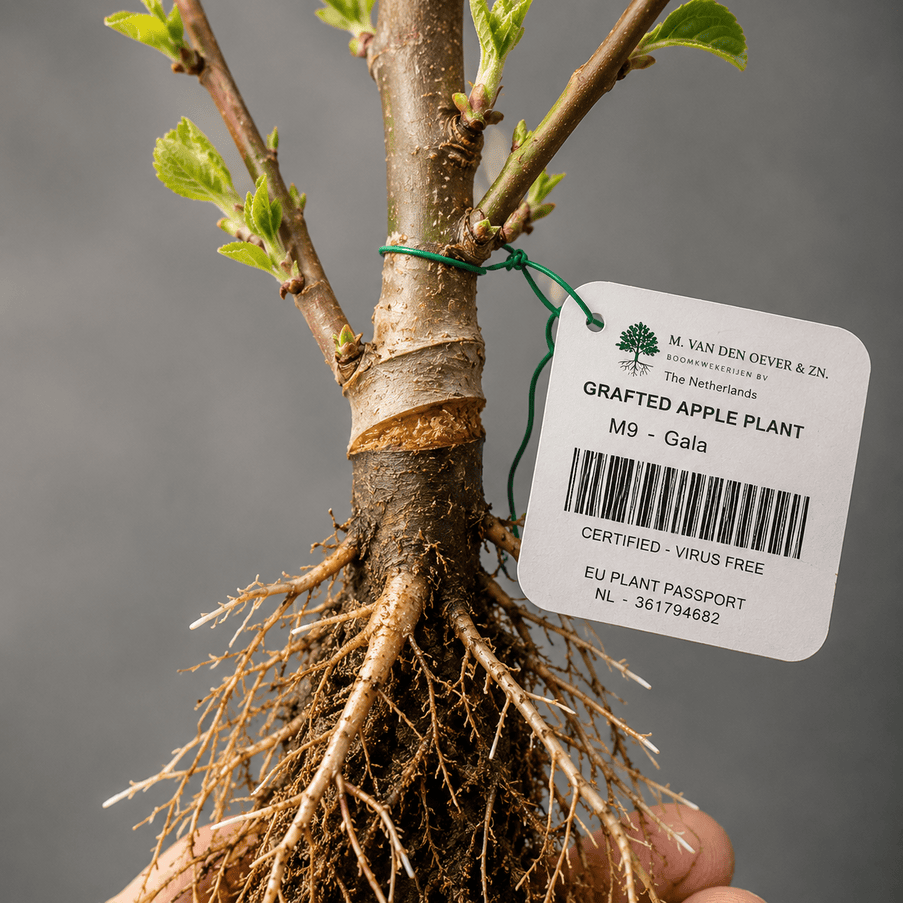
Farmers should request:
- Nursery name and location
- Rootstock details
- Batch information
- Virus-free certification
- Phytosanitary documentation
- Original nursery tags
Virus-tested and certified planting material forms the foundation of a productive orchard. Reputable nurseries maintain traceability systems that allow growers to verify exactly what was ordered and what was delivered.
The original tags attached to the trees should match the documentation supplied before shipment.
A farmer investing lakhs of rupees deserves complete transparency about the origin and health status of the planting material.
Final Thoughts
High-density orchards can be highly profitable, but success begins long before the first tree enters the field.
The reality is that many orchard failures are not caused by weather, pests, or markets. They begin with poor decisions made at the time of purchasing planting material.
Before importing HDP trees, every grower should focus on five questions:
- Is the rootstock right for my land?
- Is my payment structure protecting me?
- Am I receiving premium-quality trees?
- Can I increase bargaining power through group purchasing?
- Have I verified the original nursery and certification documents?
The best orchard managers do not simply buy trees.
They verify, inspect, negotiate, and document every step of the process.
In modern apple farming, the quality of your orchard is often determined before the first planting hole is dug.

Comments & questions (0)
No comments yet. Start the conversation.